Table of Contents
- The EV Myth That Just Won’t Die
- Why People Believe This Myth
- The Science: Why EVs Still Work Perfectly in Cold Weather
- Accessories That Keep EVs Winter-Ready
- How to Maximise Range in Cold Weather
- The Data Doesn’t Lie
- Conclusion: EVs Love Snow — If You Prep Them Right
- 10 Must-Do Steps Before Snow Season
The EV Myth That Just Won’t Die
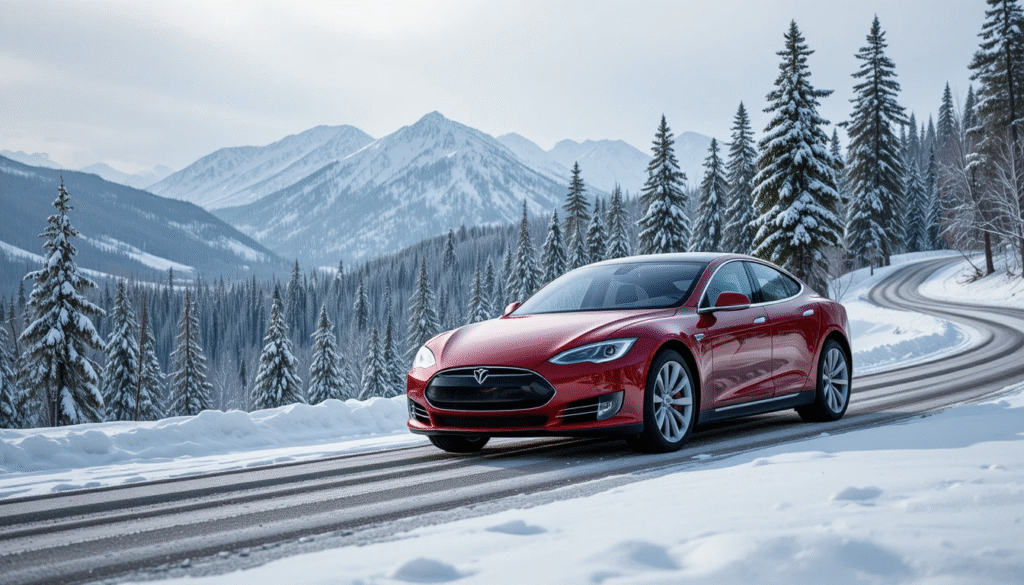
Each winter, social media fills up with videos of frozen Teslas, stiff charging cables, and headlines like “EVs lose half their range in the cold.”
It’s easy to see why so many people believe electric vehicles simply “don’t work” in winter, once temperatures drop below freezing.
But here’s the truth: modern EVs are built to handle winter — and often outperform combustion cars in comfort and control.
Let’s break it down.
Why People Believe This Myth
EV batteries are sensitive to temperature. In extreme cold, the chemical reactions that store and release energy slow down — meaning the car temporarily delivers less range.
Drivers notice a 10–20% dip in range in winter months, and assume the vehicle is “failing.”
However, what’s rarely mentioned is that petrol and diesel cars also lose efficiency in winter, often by 10–15%, due to thicker fluids and higher engine friction.
The difference is: EV owners can see their range estimates change instantly — making the effect more noticeable.
The Science: Why EVs Still Work Perfectly in Cold Weather
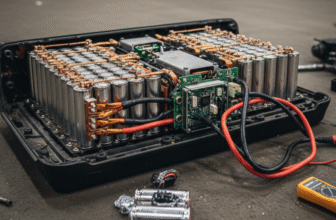
Every modern EV uses a Battery Thermal Management System (BTMS)—a built-in heating and cooling loop that keeps the battery in its optimal temperature range (usually between 68 °F and 95 °F).
When the weather is freezing, the BTMS automatically warms the battery pack before or during charging. That’s why your EV might take a few extra minutes to “precondition” before a fast charge—it’s self-protecting, not struggling in the cold.
Real-World Proof:
- Tesla Model 3 in Norway: Less than 15% range loss at 14 °F.
- Hyundai Ioniq 5 in the Alps: Average winter efficiency translates to approximately 3.4 miles/kWh.
- Swiss Post Fleet Operation (2,500 EV vans): 98% operational uptime throughout a recent severe winter.
Cold weather? No problem—if you know how to prep.
Accessories That Keep EVs Winter-Ready
Winter is when the right accessories make a big difference.
Here’s what experienced drivers rely on :
| Accessory | Why It Helps |
|---|---|
 Insulated charging cable | Prevents stiffness and improves plug-in flexibility at 14° F. |
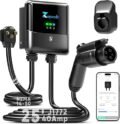 Smart charging timer or wall-box (see on Amazon.com) | Lets you schedule charging to finish just before departure, keeping the battery warm. Read the blog post here.. |
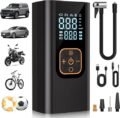 Portable Digital Inflator | Maintain proper tire pressure at all times. |
 Heated seat covers | Use far less energy than cabin heating. |
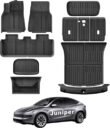 All-weather floor mats & trunk liners | Protect your EV interior from slush, salt, and moisture. |
💡 Pro Tip: Plug in whenever parked in winter — even if not charging. It allows your EV to use grid power to maintain battery warmth instead of draining its own pack.
How to Maximise Range in Cold Weather
A few simple practices can make winter driving effortless:
- Preheat while plugged in. Warm the cabin and battery using grid power before departure.
- Use seat heaters instead of full cabin heat. They warm you faster and use less energy.
- Keep tyres properly inflated. Cold air reduces pressure and range.
- Plan charging stops ahead. Apps like A Better Route Planner (ABRP) or PlugShare help find warm, reliable chargers.
- Avoid charging immediately after long high-speed drives. Let the battery temperature stabilise first.
The Data Doesn’t Lie
A 2024 study by Recurrent Auto (covering 15,000 EVs in North America and Europe) found that:
- Average winter range loss = 18%,
- No measurable long-term impact on battery health, and
- 92% of drivers reported no charging issues even at 14° F..
So yes, you might see your range estimate drop slightly — but your EV hasn’t “failed.” It’s just adapting to physics.
Conclusion: EVs Love Snow — If You Prep Them Right
Electric vehicles aren’t allergic to winter — they simply need to be treated smartly.
With built-in battery management, smart-charging habits, and a few well-chosen accessories, your EV will handle the Swiss Alps as confidently as any 4×4.
“The real myth isn’t that EVs fail in winter — it’s that drivers think they can’t adapt. EVs just need a little planning, and they’ll give you silent, warm, emission-free comfort through the coldest months.”
10 Must-Do Steps Before Snow Season
Get your EV ready for the Winter season. Download our EV Winter Prep Checklist below: