If there’s one EV myth that simply refuses to go away, it’s this one.
You’ve probably heard it at least once:
“EV batteries die after a few years — then you need a $20,000 replacement.”
Sounds scary.
Except… it’s not true. At all.
Here’s the real story.
Table of Contents
- Why EV Batteries Last Much Longer Than Expected
- 1. Big Batteries Age Much More Slowly
- 2. EVs Protect Their Batteries Better Than You Think
- 3. Heat Is the Enemy — and EVs Know How to Handle It
- 4. Real Owners Report Almost No Battery Issues
- 5. The Battery Will Probably Outlive the Car
- The Bottom Line for EV Buyers
- Final Thoughts
Why EV Batteries Last Much Longer Than Expected
When I bought my first EV, I remember having one big fear in the back of my mind: “What if the battery dies after a few years?”
It’s the same fear almost everyone has the moment they start looking seriously at electric cars. We’re so used to the idea that batteries degrade quickly — smartphone batteries dying after two years, laptops losing capacity, power banks getting weak. So it’s natural to assume EV batteries would follow the same pattern.
But here’s the truth I’ve learned from years of driving, reading data, and speaking with owners: EV batteries last far longer than most people expect. And I don’t just mean “a bit longer” — I mean multiple hundreds of thousands of miles longer.
Let me walk you through why.
1. Big Batteries Age Much More Slowly
A smartphone battery is tiny. It charges from 0 to 100% in an hour. You run it down to empty almost daily. It heats up every time you use it. In other words: it lives a very hard life.
An EV battery, on the other hand, is enormous — and it’s built to coast.
Because it holds so much energy, every charge/discharge cycle is shallow. Even if you drive 50 miles in a day, you might have only used 10–15% of the battery. That low stress dramatically slows down aging.
Real-world data confirms this.
The average Tesla, for example, loses only about 10% battery capacity after 250,000 km (155,000 miles) of driving. Many Hyundai, Kia, BMW and Mercedes EVs show similar or even better curves. In fact, there are Teslas on the road with 500,000+ km (300,000 miles) still running their original batteries.
Put simply: EV batteries are marathon runners, not sprinters. The capacity loss is slow, steady, and generally not noticeable in day-to-day driving for many years.
2. EVs Protect Their Batteries Better Than You Think
One of the biggest surprises to me when I first dug into EV technology was how much software and engineering goes into battery protection.
Every EV has a built-in Battery Management System (BMS) that constantly monitors temperature, voltage, charging speed and even how aggressively you’re accelerating. This system ensures the battery stays inside a “safe zone.”
Here are a few things your EV quietly does for you:
- Slows down charging in cold temperatures to prevent lithium plating
- Cools the battery during fast charging
- Limits power when the battery is too hot
- Avoids using the top and bottom 5–10% of the battery (the part that causes degradation)
You think you’re using 0–100%, but in reality you’re using something like 5–95% — and that’s intentional. Manufacturers know what kills lithium cells, so they design the car to avoid it automatically.
This is why modern EVs are far more durable than early models from 2008–2015.
3. Heat Is the Enemy — and EVs Know How to Handle It
Let me put it simply:
Heat degrades batteries. Cold slows them down, but heat kills them.
This is why temperature management is everything.
Most modern EVs — especially in Europe — have liquid-cooled battery systems. That means the battery pack has coolant channels running through it, similar to a radiator in a combustion car, keeping it at the perfect temperature.
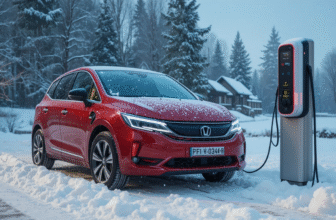
I drove my EV through a Swiss winter, and I can tell you: cold weather is annoying, but it doesn’t damage the battery.
Hot weather, however, is a different story — and that’s where cooling systems shine. Brands like Tesla, Polestar, BMW, Mercedes, Kia and Hyundai all use excellent liquid-cooling systems that keep batteries healthy for 10+ years.
4. Real Owners Report Almost No Battery Issues
Forget marketing claims — real-world data is what matters.
Across thousands of EV owners, the numbers are incredibly reassuring:
- Most EVs lose only 1–2% battery capacity per year
- A large majority never need a battery replacement
- Warranty coverage is typically 8 years / 100,000 miles, but actual lifespan is often double that
Many EV taxis are hitting 200,000–300,000 miles with batteries still at 80–90% capacity. These cars charge fast, drive long distances daily, and still hold up.
If taxis can do it, your daily commute definitely won’t be a problem.
5. The Battery Will Probably Outlive the Car
Here’s my favourite part:
Most experts expect EV batteries to last 15–20 years or more — which is longer than the average ownership lifespan of a vehicle.
And even when they’re “done” for driving, they still have 70–80% capacity left… which makes them ideal for second-life uses like home energy storage. The battery’s life doesn’t end when the car’s life does.
The Bottom Line for EV Buyers
The €10,000 replacement fear belongs firmly in the past, fueled by experiences with early-generation 2011–2014 models that lacked modern thermal management.
The reality of the modern EV is straightforward:
- They don’t wear out after a few years. Capacity loss is slow, manageable, and often less than 2% annually.
- They are protected 24/7 by sophisticated software and cooling systems designed to maximize their lifespan.
- The battery’s useful life will almost certainly outlast your ownership of the car.
When you invest in an EV, you are investing in a technology engineered for long-term reliability and durability, backed by solid warranties.
The next time someone tells you that the battery life is the biggest problem with electric driving, you can confidently tell them: The battery will probably outlive their combustion engine.
Final Thoughts
If you’re like me when I first started, you might still be wondering: “But shouldn’t I worry at least a little?”
Honestly? No. EV batteries today are incredibly robust, designed to last, and smartly managed by software that protects them 24/7.
The real risk isn’t the battery failing — it’s holding onto outdated fears that stop people from enjoying the benefits of electric driving.
So next time someone tells you “EV batteries don’t last,” feel free to smile.
Because now you know: they last much longer than anyone expected.
Top EVs for Maximum Battery Longevity and Warranty